
TV, Radio, Print or Digital? Planning an Advertising Mix for Sri Lankan Brands
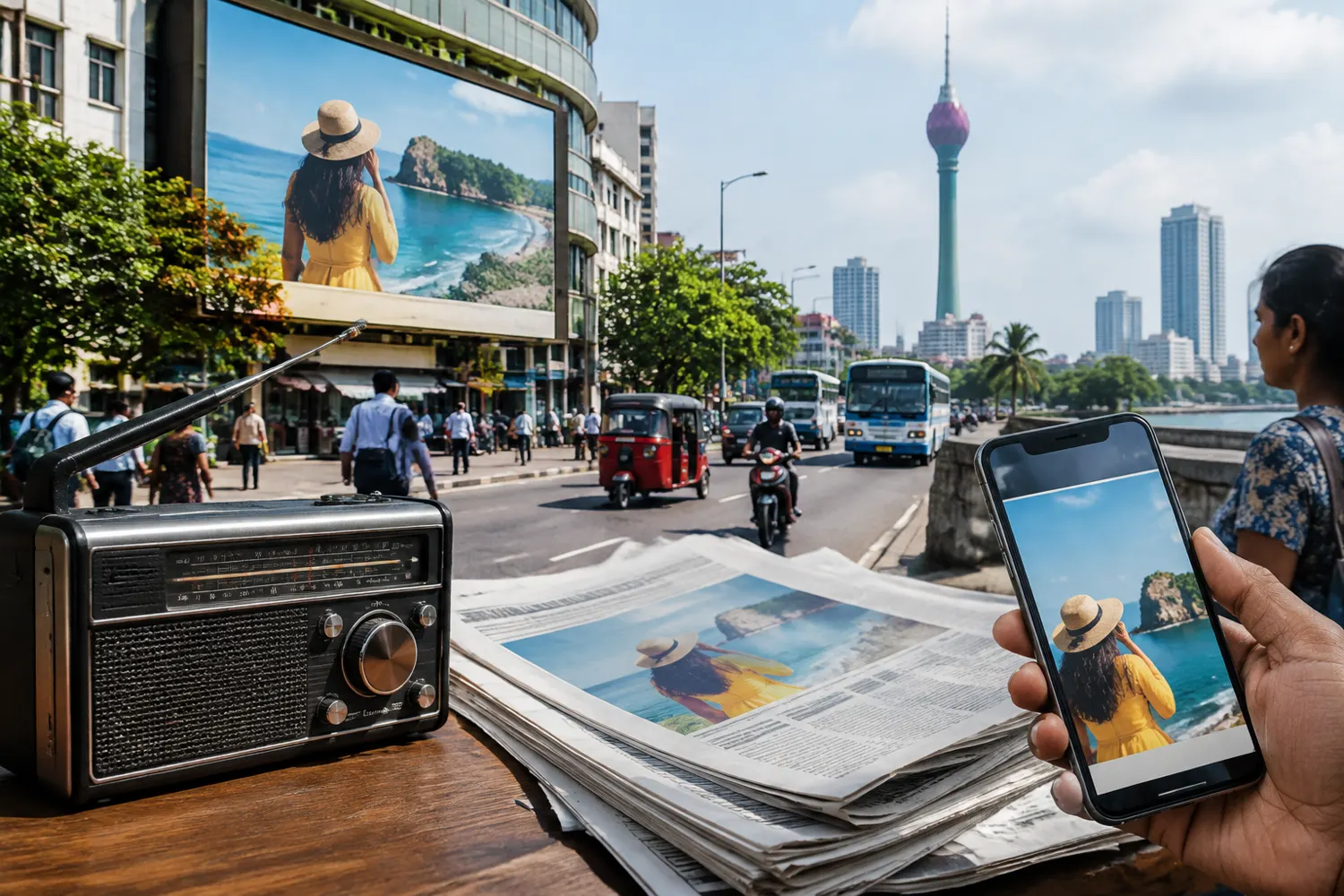
Sri Lanka is one of the few markets where traditional media still reaches huge audiences. Teledramas, news bulletins and morning radio shows remain part of daily life. At the same time, almost every customer now carries a smartphone. The brands that grow fastest use both, each for what it does best.
For campaigns that run across TV, radio and social media at the same time, an advertising company in Sri Lanka that handles both media buying and digital keeps the message consistent. This guide explains what each channel does, what it costs, and how to combine them.
Traditional vs digital: who each reaches
| Channel | Strength | Weakness | Best for |
|---|---|---|---|
| TV | Mass reach and credibility, fast | Expensive, hard to measure | National brands, launches |
| Radio | Frequency, low cost, local | Audio only | Retail offers, events, local reach |
| Newspapers | Trust, older audiences | Declining readership | Corporate, property, notices |
| Outdoor (billboards) | Constant visibility on key routes | No targeting | Brand awareness, store locations |
| Digital (social, search, video) | Precise targeting, measurable | Crowded feeds, ad fatigue | Almost every business |
TV advertising
TV is still the quickest way to reach the whole country. Rates vary widely by channel and time slot. Indicative rate-card prices for a 30-second spot are roughly:
| Channel | Prime time (approx. LKR) | Off-peak (approx. LKR) |
|---|---|---|
| Hiru TV | 180,000 – 400,000 | 60,000 – 150,000 |
| Sirasa TV | 150,000 – 350,000 | 50,000 – 130,000 |
| TV Derana | 150,000 – 350,000 | 50,000 – 130,000 |
| Swarnavahini | 100,000 – 280,000 | 35,000 – 100,000 |
| ITN | 80,000 – 220,000 | 30,000 – 90,000 |
| Rupavahini | 70,000 – 180,000 | 25,000 – 80,000 |
Media buyers usually negotiate below rate card, often 20–40% lower, especially for packages. See the latest TV advertising rates for more channels and details.
Remember: production costs (the ad itself) come on top of airtime.
Radio advertising
Radio is strong in the morning and evening commute, and many stations have loyal regional audiences in Sinhala, Tamil and English. It's ideal for repeating a simple message: a sale, an opening, an event date.
Tip: radio works best with frequency. Several spots a day over a couple of weeks beats one expensive spot.
Newspaper advertising
Weekend newspapers still reach older, higher-income and corporate readers. They work well for property launches, education intakes, tenders, recruitment and announcements. Pair a print ad with a QR code or a short web address so you can track response.
Outdoor advertising
Billboards and digital screens on busy routes, such as Galle Road, Baseline Road and the main highways, give constant visibility. They suit brand awareness and pointing people to nearby stores, but can't be targeted or measured precisely.
Digital advertising
Digital lets you start small, target precisely and measure everything:
- Facebook and Instagram: broad reach with detailed targeting.
- TikTok: younger audiences, video-first.
- Google Search: people actively searching for what you sell.
- YouTube: video reach at a lower cost than TV.
Sample advertising mixes
Small business (local reach)
- Facebook and Instagram ads plus WhatsApp for enquiries.
- Google Business Profile and Google Search ads.
- Local radio during key sale periods.
Growing brand (regional or national)
- Ongoing social media and search ads.
- Radio campaigns around key seasons, such as Avurudu and December.
- Selected newspaper ads for launches.
National brand
- TV for big launches and seasonal peaks.
- Radio for frequency.
- Digital all year round, with YouTube to extend TV reach.
- Outdoor near key retail locations.
Measuring results across channels
- Use a different phone number, promo code or landing page for each channel.
- Ask every new customer "How did you hear about us?"
- Watch search volume and website traffic during TV and radio bursts. A spike shows the campaign is working.
- Compare cost per enquiry across channels each quarter, and move budget to what works.
Frequently asked questions
Is TV advertising still worth it in Sri Lanka?
Yes, for mass-market brands that need national reach and awareness quickly. Smaller or niche businesses usually get better value from digital ads, which can be targeted and measured more precisely.
How much does a TV ad cost in Sri Lanka?
A 30-second prime-time spot on a major channel can cost about LKR 150,000–400,000 at rate card, and off-peak slots much less. Media buyers often negotiate 20–40% below rate card, and the cost of producing the ad is extra.
What is the cheapest way to advertise in Sri Lanka?
Targeted social media and Google ads usually cost the least to start, because you set your own budget and can stop at any time. A free Google Business Profile also helps local customers find you.
What does an advertising company do?
An advertising company plans campaigns, creates ads, buys media space on TV, radio, print and digital, and reports on the results, so one team keeps the message consistent across every channel.